

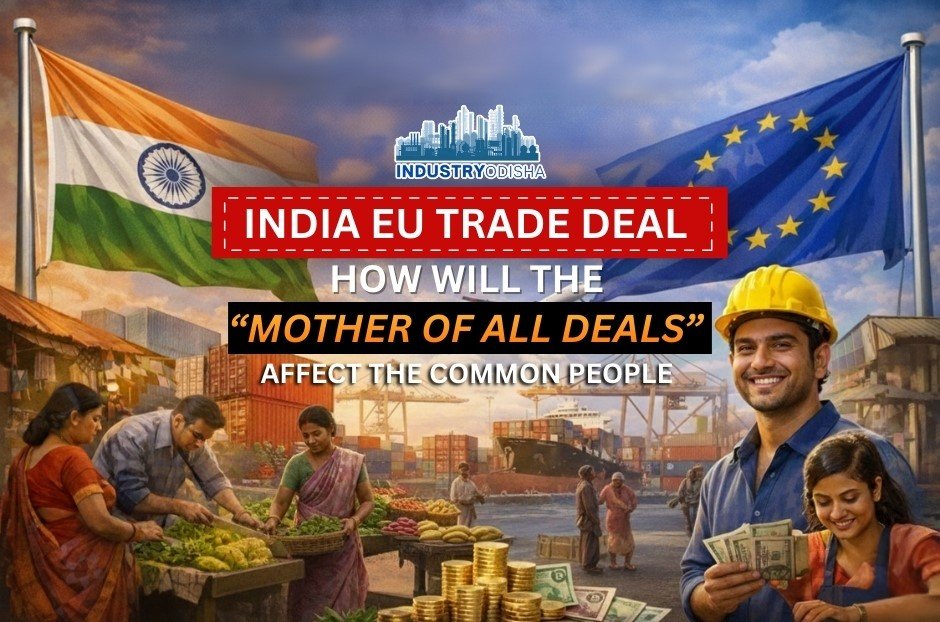
The India-EU trade deal has been announced by India and European Union on January 27, 2026, and this can be called ‘an important milestone in economic partnerships’ for India. This landmark trade deal is also referred to as ‘Mother of all deals’ and will enable better market integration between the world’s 4th and 2nd largest economies.
This trade deal will result in reduced tariffs on products across different categories and will be helpful for businesses for both markets. The bilateral trade will significantly boost $136 billion bilateral trade relationship of both markets. The complete rollout of the of the India EU deal is expected to rollout in 2027.
What does the deal mean in terms of tariff
For India
India gets an access to EU markets across 97% of tariff lines which cover 99.5% of trade value.
- 7% of Indian exports will have immediate duty elimination. This includes labour-intensive sectors like textiles, leather and footwear, tea, coffee, spices, sports goods, toys, gems and jewellery and specific marine products.
- 9% of Indian exports will have zero duty over 3 and 5 years.
- 6% of Indian exports will have preferential access through tariff reduction. This includes certain poultry products, preserved vegetables, bakery products and other. On the other hand, categories like cars, steel, certain shrimps/ prawns will have tariff reduction through TRQs (Tariff Rate Quotas).
- It is important to point out that India has safeguarded sensitive sectors including poultry, soymeal, certain fruits, dairy, cereals, certain fruits and vegetables. This is done to balance export growth with domestic priorities.
For EU
India offers 92.1% of its tariff lines that cover 97.5% of the exports of the European Union.
- 6% of tariff lines will have immediate duty elimination or zero tariffs. This includes Industrial goods in manufacturing.
- 5% of tariff lines will have reduction in duty in phases over 5, 7, and 10 years. This will reduce the import duty of automobiles to as low as 10%.
- 3% of tariff lines will have phased tariff reductions.
In simpler terms, the Mother of all deals makes a lot of items cheaper for common people across European Union as well as India. For Indian residents luxury cars, processed foods, alcoholic/non-alcoholic beverages, machinery for manufacturing get cheaper. Similarly, for residents in European Union products including textiles, footwear, gems, jewellery, seafood, chemicals, plastics get cheaper.
